

Professional Bachelor's Degree (L3)
Digital Journalism
The future of
Digital
Journalism
starts here.
The Professional Bachelor's Degree (L3) in Digital Journalism, offered in collaboration with MCCI Business School, will be complemented by a specific pathway dedicated to Mauritius and the Indian Ocean.
Dual Degree
Academic validation from the University of Lille combined with the professional prestige and historic reputation of ESJ Lille.
European Recognition
A French State Diploma at Bachelor's level (L3), ideal for joining major newsrooms or pursuing a Master's degree.
Global Network
Join a community of over
5,000 active and influential alumni across all continents.
ESJ Lille:
A century of excellence at the heart of information.
A key player in journalism training for a century in France, ESJ Lille puts its experience and expertise at the service of training journalists in Mauritius and the Indian Ocean. Founded in 1924, ESJ Lille is one of the first journalism schools in Europe. It is the oldest of the schools recognized by the profession in France and has trained more than 5,000 journalists who now operate around the world. The Professional Bachelor's Degree (L3) in Digital Journalism, offered in collaboration with MCCI Business School, focuses on the technological developments transforming the profession and will be complemented by a pathway dedicated to the specificities of Mauritius and the Indian Ocean.
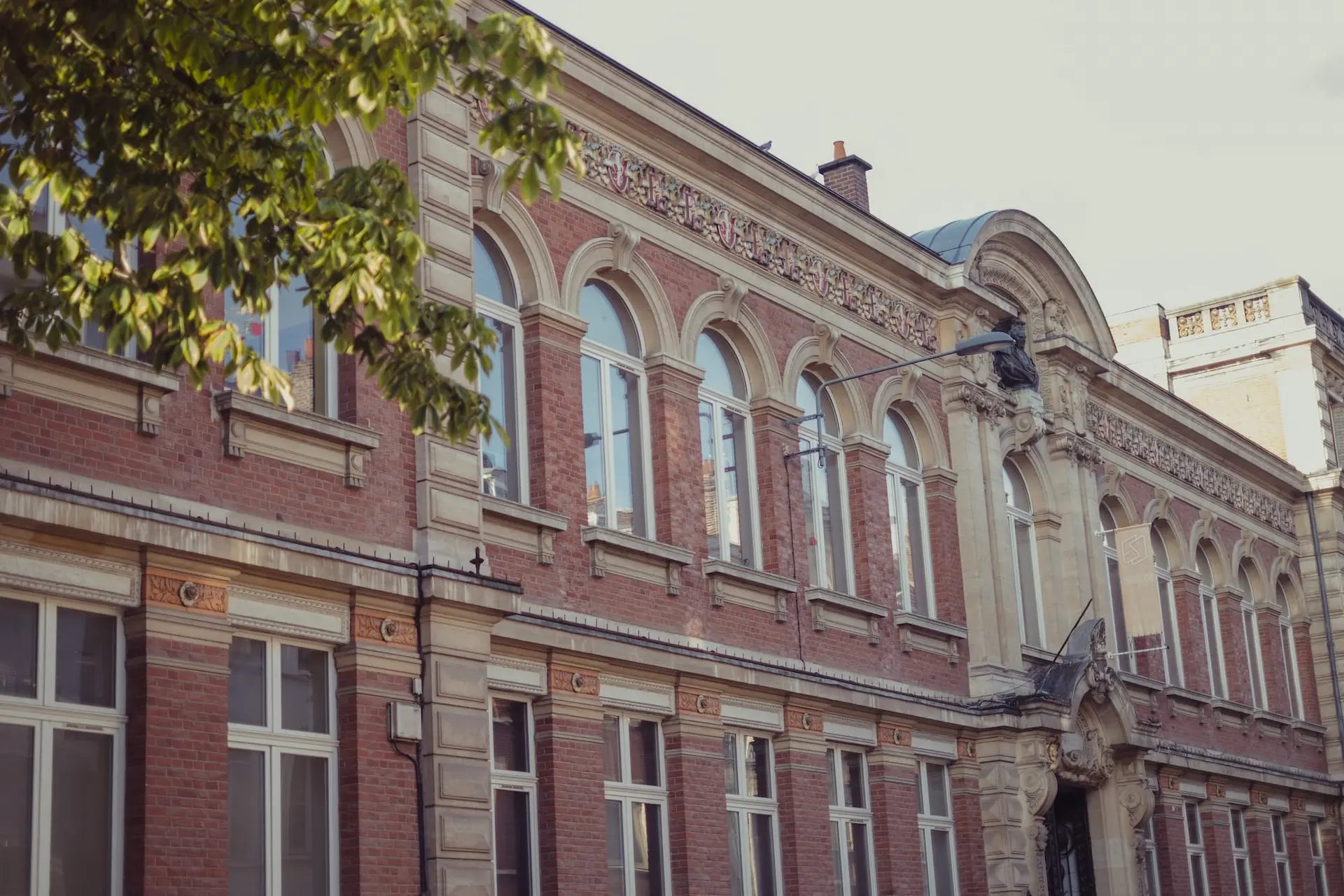
Of history and innovation in journalism training.
HYBRID
Program Structure
Flexible training: designed to perfectly adapt to the pace of students and professionals already working in the Indian Ocean.

ONLINE
Flexibility and Theory
Follow your fundamental and methodological theoretical courses remotely, thanks to our digital ecosystem.
ON-CAMPUS
Immersion and Newsroom
Participate in seminars, intensive practical workshops, and professional projects directly on the Mauritius campus.

Program
Digital Journalism,
Methods and Techniques
Mauritius and
Indian Ocean Pathway
This module is dedicated to journalistic writing in all its dimensions. The student dives into the heart of the matter: it is through writing that they will apply the previous modules. The reflexes of journalistic writing must be quickly acquired, in theory and then in practice, through the numerous exercises offered. The aim is to develop creative writing (writing should be a pleasure!), but also effective writing (optimizing expression and sentences). This writing module will emphasize the particularities of web writing, its characteristics, and its essential principles for good SEO. The student will also learn to know their readership, to find the angle and the essential message of their future article, and to distinguish and write correctly the different parts of the article (lead, hook, headline, etc.).
Having the freedom to vary editorial genres is one of the greatest pleasures of journalistic writing. In this module, students learn to design, produce, and write an interview, a report, a portrait, or a simple summary. By mastering these basic editorial genres, they can then vary the forms of writing, especially on the web. This module relies on theory, experience sharing, and practice. Numerous toolboxes allow students to acquire the right reflexes before, during, and after fieldwork.
This module consists of searching for information sources and categorizing them. Information verification is more necessary than ever in the Web 2.0 era. This is why every journalist must be able to master information verification techniques in order to fight, in particular, against fake news.
What is the role of the media in society? What does press law say, especially digital press law? What are the means of ensuring media accountability on the Internet? What encouraging professional practices? How are the rules of the profession evolving with the web, social networks, and artificial intelligence? What are the different regulatory and sanctioning bodies? This module aims to recall the social function of the media and the public's right to information. It provides a broad overview of the main legal rules and ethical charters that frame the work and responsibility of the web journalist. It helps distinguish professionals from charlatans with concrete examples of misconduct and good professional practices. Finally, in the era of social networks and artificial intelligence, this module provides valuable information on the latest legal and ethical developments, taking stock of the different forms of mediation, regulation, and sanctions.
The objective of this module is to learn or review the functioning of a traditional newsroom and to understand everyone's roles. Beyond the classic organization, this module emphasizes recent organizational developments in newsrooms, particularly through the integration and use of new technologies. The course consists of definitions, references, videos, links to podcasts, but also some basic practical tools that will allow students to use these technologies in their respective newsrooms. An introduction to desk duties is also planned: working on dispatches, digital monitoring, social networks, live coverage, etc.
This module analyzes the transformations of the media landscape in the digital age. Understanding new economic models, the challenges of credibility, and the evolution of journalistic practices in the face of digital platforms and social networks.
Information verification is more necessary than ever in the Web 2.0 era. This module explores information verification techniques and tools to fight against fake news and online disinformation.
How are the rules of the profession evolving with the web, social networks, and artificial intelligence? What are the different regulatory and sanctioning bodies? This module provides valuable information on the latest developments in the digital media landscape.
This French reinforcement module aims to prepare students to master the French language, expression techniques, and the art of journalistic writing. It revisits the fundamentals of orthotypography, proofreading, and editing applied to digital journalism.
This module will give students the keys to quickly understand digital press articles in English.
Following the news is essential when you are a journalist in order to know how the world is moving and to find story ideas. Some follow it more closely when they are in charge of the press review. This daily morning appointment gives listeners and viewers an overview of the news or topics being debated in our country or around the world. How to choose topics? How to order them? How to find the most relevant sources? In this module, you will learn to write an international press review in groups and to present it individually either in audio or video format.
This module will allow students to discover different major journalistic specializations: Journalism and Environment, Journalism, Science and Health, and Journalism and Sports.
What is the role of the media in society? This module aims to recall the social function of the media and the public's right to information. It provides a broad overview of the main legal rules and ethical charters that frame the work and responsibility of the web journalist.
How are the rules of the profession evolving with the web, social networks, and artificial intelligence? What encouraging professional practices? This module explores the technological implications on the circulation of information.
What posture and distance should a journalist maintain when dealing with political issues? Independence and integrity must remain the priorities of the media professional in all circumstances, including when facing politicians. Balance of powers, rule of law, governance, and major ethical principles applied to the political world are studied in this module. Emphasis is also placed on the political interview and the role of journalists in election coverage.
This module allows students to acquire the basics of general culture aimed at contextualizing and better understanding current events. Objective: to equip oneself with a geopolitical analysis grid to understand and deal with international current affairs as best as possible.
Seminar: Introduction to academic research.
Mobile video is at the heart of web newsrooms. It allows for quickly capturing the news with more or less lightweight equipment. The objective of this module is to enable students to acquire image capture and editing skills using their smartphone. The course explores both the questions to ask before going into the field and the choice of images, framing, and online publishing on the Internet and social networks.
This module aims to recall the social function of the media and the public's right to information. It provides a broad overview of the main legal rules and ethical charters that frame the work and responsibility of the web journalist.
The Internet is a reservoir of documentary sources. It then becomes necessary for a journalist to know how to search the web. The average Internet user, as we know, is in a hurry. The web journalist is even more so. This is why they must acquire in advance the tricks to avoid wasting time when investigating on the web. This begins above all with mastering the environment on which they search. This module includes macro-environmental analysis, web tool usage, and fact-checking. Not to mention the main tools offered by OSINT or open-source intelligence.
This university course aims to understand the current challenges related to disinformation, post-truth discourse, and the acceleration of fake news circulation, how to spot them, and how to counter them on the web, platforms, and social networks.
This module presents the diversity of artificial intelligence tools useful for journalistic practice. Without forgetting to open the debate on the challenges, dangers, and limits posed by this now essential technology.
This is a capstone module that allows the student to put into practice everything they have learned during their year of training. The objective is to create a news website on a specific theme. Students feed the site with a topic of their choice, which they develop across all formats.
Minimum six-week internship in a digital media outlet or professional experience for students already in employment. This professional project leads to the writing of a reflective report and a defense questioning the practices and postures adopted in the newsroom.
The objective is to create a news website on a specific theme. Students feed the site with a topic of their choice, which they develop across all formats.
- Colonial periods: Dutch, French, then British
- The abolition of slavery (1835) and its consequences
- Indian indenture and demographic transformation
- The road to independence (1968) and the Republic (1992)
- Construction of Mauritian identity (cultural and linguistic plurality)
- Separation of powers and independent institutions
- Functioning of parliamentary democracy inspired by the Westminster model
- Roles of the President, Prime Minister, and Parliament
- The electoral system (Best Loser System, constituencies)
- Major political parties and alliance dynamics
- Multiculturalism and living together
- Religion, language
- Influence of communities in political life
- Evolution of the younger generations' mindsets
- The specificity of law in Mauritius and the rule of law
- Control institutions (ESC, FCC)
- Freedom of the press and legal framework for the media
- Transparency, corruption, and public governance
- Maritime and strategic challenges (exclusive economic zones) / Military challenges
- Relations with major powers (United States, India, China, France, United Kingdom)
- Regional dynamics: Indian Ocean Commission, Indian Ocean Rim Association
- The Chagos issue and sovereignty
- Madagascar: political instability and transitions
- Seychelles: from single-party rule to pluralism
- Comoros: coups d'état and institutional fragility
- Réunion and Mayotte: status as French departments
- From sugar to diversification (textile, tourism, financial services)
- Mauritian development model (welfare state)
- Social inequalities and public policies
- Role of international institutions
- New economic challenges
- History of the Mauritian press and overview of the press in the Indian Ocean
- Current media landscape (private vs public)
- Legal framework (ICTA, defamation laws, etc.)
- Contemporary challenges: independence, concentration, digital press
ADMISSION
Journalism is evolving
Be among those who reinvent it
We are looking for passionate, curious profiles ready to take on the challenges of tomorrow's journalism.
Required Diploma
Holder of an HSC / BAC + 2 diploma.
BTS Pathway
Holder of HSC / BAC: first two years in BTS communication before joining the Digital Journalism Bachelor's Degree in the 3rd year.
Working Professionals
Possibility of VAE (Validation of Acquired Experience) by portfolio.
Language Proficiency
Good level of French in writing and speaking.
Selection
Admission by portfolio, test + interview.
Dual Degree
A major international academic recognition:
Professional Bachelor's Degree — University of Lille
Institutional Diploma — ESJ Lille

Next intake: September 2026
